Archive for friends
Arley
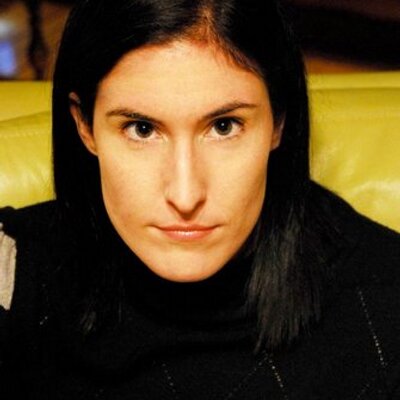
My Kwantlen colleague Arley McNeney was a visionary who welcomed all manner of detail with a humbling level of attentiveness and who accepted everybody, and she made the people around her better. Such a strong good spirit.
Almost all of our interactions were via correspondence or social media, though I finally met her at The Commodore in Vancouver back in 2019. She was there for the headlining Mountain Goats, me for Lydia Loveless, who opened for them.
From our school’s announcement:
It is with profound sadness and a deep sense of loss that we share the passing of our friend and colleague, KPU instructor, Arley McNeney (Cruthers). Arley was a mother, a sister, a daughter, and a friend. She was a highly respected instructor and beloved colleague to those who were fortunate to collaborate and work alongside her. She was a decorated Paralympian and parasport athlete, a talented writer and novelist, an unending builder of community, an advocate for inclusion and disability justice, and a creative linocut artist.
Arley instructed business communications, public relations, and entrepreneurial leadership at KPU. However, her journey into becoming an educator was winding: in 2001 she joined the Canada women’s national wheelchair basketball team and won gold at the Wheelchair Basketball World Championship the next year. She was the recipient of BC’s Premier Athletic Award for New Westminster and in 2004, she was named to Team Canada’s national wheelchair basketball team to compete at the 2004 Summer Paralympics where she helped the team win bronze. In 2006, Arley was named to Team Canada for the 2006 Wheelchair Basketball World Championship. In 2014, Arley received the BC Wheelchair Basketball Society’s Coach of the Year award.
Not only was Arley a successful athlete and coach, she was a former communications/marketing/PR professional for parasports, the founder of an adaptive soccer team that uses disability justice principles, and the author of four novels. Arley’s first novel was shortlisted for the Commonwealth Foundation. She attended the University of Victory and earned an MFA from the University of Illinois at Urbana-Champaign.
Arley was an innovative leader in open education, Open Educational Resources (“OERs”), and open pedagogy. In 2019, Arley presented an open-licensed game developed by her applied communication students that focused on instructors developing compassion and empathy for students struggling with (unaffordable) textbook costs and the role OERs can play in supporting students’ well-being and success. Arley’s work was pivotal in the open education movement and the continued work in the area of Zero Textbook Costs (“ZTCs”). That same year, Arley was awarded for Excellence in Open Education by BC Campus.
In addition to being widely recognized as an advocate in the areas of open education, Arley was a tireless scholar and advocate in the areas of decolonization, Universal Design for Learning (UDL), anti-racism and anti-oppression, and disability justice. She collaborated with colleagues across KPU through her work as an Open Education Teaching Fellow, decolonization and Indigenization faculty champion, and disability justice activist. She was an early leader and mentor in developing Open Educational Resources at KPU, and published Business Writing for Everyone in 2019, an inclusive guide to writing in the workplace that has since been adopted, adapted, and remixed by KPU faculty and countless educators around the world. She was regularly consulted on questions of accessibility and UDL in course design and program review, and her expertise and the generosity with which she shared it, are irreplaceable. In recognition of her contributions to supporting social justice, in 2021, Arley was an inaugural recipient of KPU’s Justice, Equity, Diversity, and Inclusion awards.
Arley’s focus on supporting students in all aspects of their lives from UDL to food security was unparalleled, and her supportive, non-judgemental, and student-centred approach to teaching and focus on student success, has inspired us to do our best in our work at KPU.
Arley sought to truly understand and engage her students, co-creating empowering learning opportunities with them each semester, and often bringing food to share in the classroom. She was incredibly generous with her time and energy, supporting students and colleagues alike, and sharing her expertise and teaching resources freely.Arley’s legacy is immeasurably rich and will continue through the inspired work of her friends and colleagues, and the thousands of students she taught. Her work and contributions embody the highest values of our university’s motto, and are something we should all aspire to: “through tireless effort, knowledge and understanding.”
The outpouring of emotion and admiration on Twitter has been really something. I am at a loss for words, mostly, or at least for the adequate ones. My colleagues have helped me out in that respect. Melissa Ashman’s thread is close to perfect:

My train
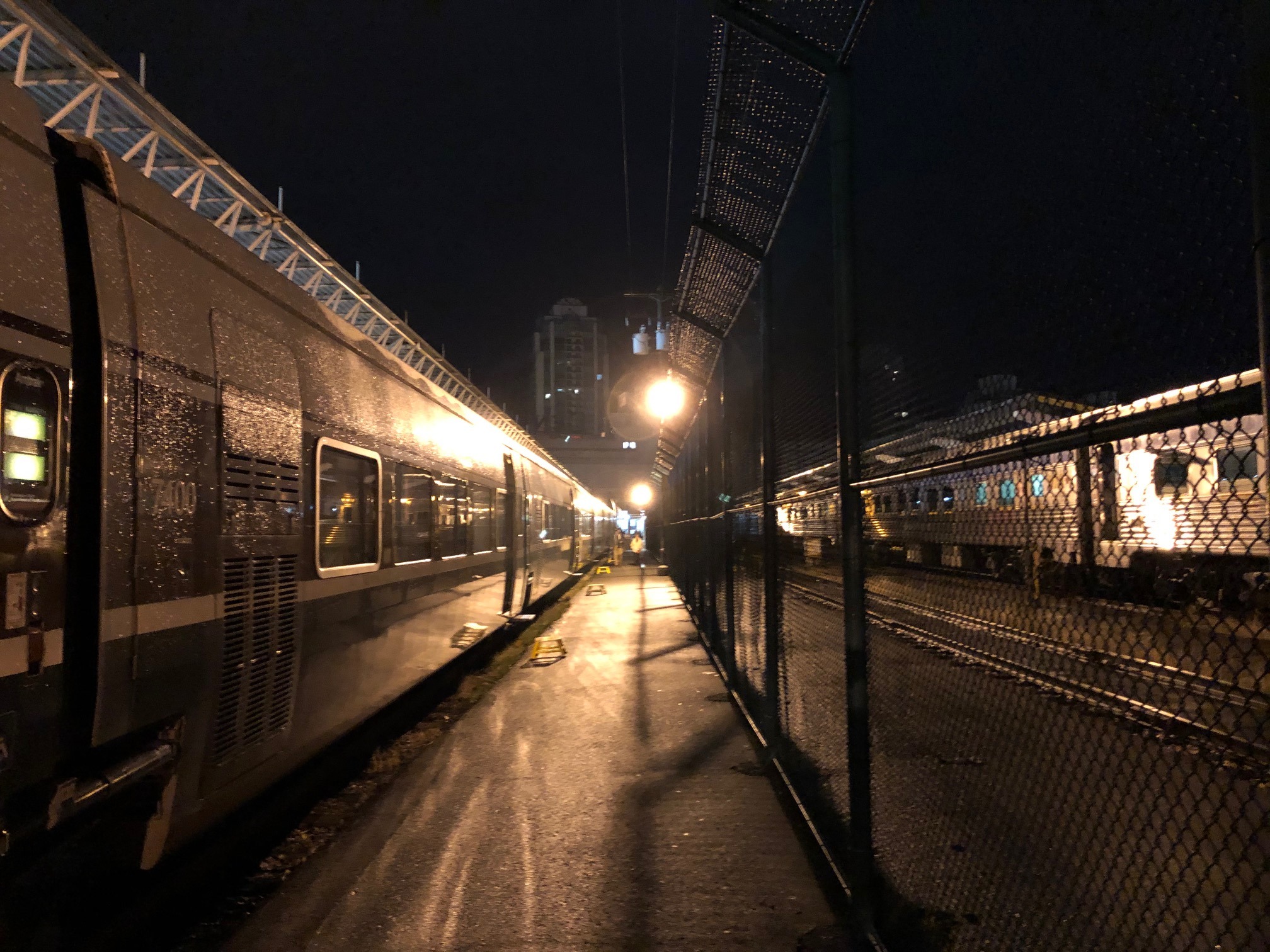
My friends know I love a good train ride. And more than that, I count on one particular line, the Amtrak Cascades, to bring me to and from loved ones in the States. Discontinued at the start of the pandemic, Amtrak restarted partial service a few months ago, and in March Amtrak is bringing back the second train – early morning southbound to Washington State, night-time return to beautiful Vancouver. They’re hiring, and I could not be more pleased.

Below are photo tributes I made to my home stations, in Vancouver and Seattle, a few years back.

The new year
Literally nothing has gone according to plan during my holiday break, except for the love shared with my family and friends. I had to throw away Plan H earlier today.
Classes start next week – two sections of Advanced Professional Communications and one of Technical Report Writing (more fun that it sounds). I am looking forward to meeting my new students.
“Where the Sagebrush Grows”

Brittany Bronson’s review of my friend John Glionna‘s book, “Outback Nevada: Real Stories from the Silver State,” really captures Glionna’s gifts and the heart of his charming, striking feature writing.
Most of Nevada’s land — almost 86 percent — is uninhabited by people, covered in sagebrush, and managed by the federal government. That leaves plenty of room for the imagination. Green corporations envision wind farms. Red politicians see a dumping grounds for the nation’s nuclear waste. Even for those who have driven one of those two-lane highways stretching across high desert, it is still easy to assume that there is nothing, and no one, out there.
John M. Glionna sets out to prove the opposite in Outback Nevada: Real Stories from the Silver State, a collection of reported essays profiling the inhabitants of “the real Nevada.” Written between 2013 and 2021, the essays span the rise and fall of President Donald Trump, a worsening drought, and a global pandemic. Glionna lets his subjects serve as the narrators, comedians, and political commentators, and his cast of characters is well curated. They disrupt any assumptions of Nevada as a culturally homogeneous place.
The book’s 45 subjects include a Catholic priest who conducts mass in casinos; elderly best friends who have outlived their cowboy husbands; a Shoshone activist who uses art to comment on the environmental impacts of mining; the Thunder Mountain Indian Monument; and the daily police blotters of the state’s smallest towns, full of “scandal, buzz or scuttlebutt.”

‘Heroines Revisited’ review
Mala Rai’s review of Lincoln Clarkes‘ “Heroines Revisited” gets the important things exactly right.
For the people that loved her, whether she is missing, deceased, or transformed, these pages are a sensitive keepsake. As half the women photographed may be closely connected to [or even have been among] are murdered and missing indigenous women, these pictures may be the sole glimpse into a family member or friend’s troubled time. How can the surroundings be so dire, yet every woman in that instance is utterly stunning? They are in terribly vulnerable places, yet invoke the persona of tough-as-nails heroine: Your sister riding a 10 speed, smoking a cigarette, clad in page boy at and a crop top. Your former high school friend at St. Paul’s hospital, perched in a confident, yogi pose upon her bed. The woman who’d become your mother, about to inject, focused on her syringe, but 13 pages later, impeccably put together, she is confidently staring right back at you. A tender Mother’s Day sisterhood collective. Perhaps their arrival at that destination in life was a shock. Maybe it was expected. It isn’t profound sadness or pain that I see in each frame, but the significance of these women in our society. They likely had no idea that their images in the finished product would comprise a collection of artful history. The pictures make us hunger for more details of each person’s personal history, but there are no crumbs to spare.
Phyllis Christopher

‘The Guardian’ interviews wonderful photographer and friend Phyllis Christopher. Her book “Dark Room: San Francisco Sex and Protest, 1988-2003” is being published this year.
There have been few times in history where women run the camera, the press and the ecosystem of publishing. But the world we created in San Francisco felt like a beautiful laboratory. It wasn’t separatist by any means – we didn’t seclude ourselves from men and non-lesbians – but we were making work for each other. I think that’s evident in these images.
I wrote about Phyllis Christopher’s work a few years back.

The good sigh
“We realize we have made a friend when in a relationship we are able to suppress that special disappointment which follows getting to know him, her, anyone – even oneself – well,” wrote my old University at Buffalo professor Lionel Abel. It is sweet to remember those first resigned sighs, from my loyal friends. The essence of friendship is neither correction nor therapy.

Home

This is from late 1999, on my way to the clinic to get my staple-stitches out. I had injured myself trying to hop a curb with my bike: I tipped over, shattering my humerus, separating my shoulder, and breaking a bone in my neck. I was in the hospital for about a week.
It was an exceptionally sweet time for me, though. My care at St. Paul’s hospital was marvellous and friendly, and there was no bill. Lots of friends and colleagues and clients from work came by. My brother and his wife brought their kids. I enjoyed morphine for the first and last time.
I was still pretty new to Canada – born here but raised in the States, not returning until 1996. It was during this hospital stay that I saw manna falling from the sky – here, in Vancouver, BC. I was given such grace.
The photograph is by my dear and esteemed friend Lincoln Clarkes, who had brought two pies to my hospital room.
A gift for friendship …
I’ve certainly been the lucky recipient of John‘s. Many have.
I remember the moment well: I was lounging in bed on a Saturday night, drinking red wine and reading some escapist nonfiction, when the telephone rang.
It was a young friend, a guy half my age, and he was in crisis.
He and his girlfriend had moved in with her parents to save money. He was calling to report that they’d just broken up.
“Damn, dude,” I said. “Where are you right now?”
He was still in the room with her. There was nowhere else to go.
“You can’t stay there,” I said. “Come to my place.”
He was just one of the wards to take up residence in the suburban rehab facility of penance and partying I call the Home for Wayward Men.
Many check in, serve their time, and move on. Some return for more deeply-seated therapy, higher dosages of medication.
Others drop in regularly while on business trips. One blows in once a year like a disheveled desert tumble weed rolling down Interstate-15.
Most are younger than me, one older. Sometimes they arrive in twos.
What they all have in common is that they need a place to go, to escape crumbling relationships or just the suck of everyday life.
The door is always open.
I live alone, my wife resides in another state. I have time and space to lend my ailing droogies a helping hand.
I have no clue what they do in their room once the door is closed. One is like a messy teenager, leaving the place a disaster zone of plastic swizzle sticks, hairballs and oily orphaned socks each time he leaves.
No matter. I just hazmat the joint and await the next checkin.
Meanwhile, I keep two chairs in the living room, one facing the other. One guest and I refer to them as the Sultan’s Chairs. …
Canada’s “Covid Alert” app
My friend Chet Wisniewski, a world-renowned expert in data security, breaks it down for you: “These apps are like wearing a mask. They are there to protect others as much as yourself.” Chet’s convinced the app protects user privacy. I’m signed up.
The opposite of necessary exaggeration
My friend Jonathan Mayhew asks, “Could there be things that had to be understated to be stated at all?”
I’m still thinking.
In which yours truly gets written up …
… by dear friend John Glionna on his superb blog.

(photo by Lincoln Clarkes, 2002)
“You gave me a D …”
This was on my voicemail this morning, courtesy of a dear old friend:
.
A portrait of friendship

My friend kat kosiancic would have had a birthday a few days ago. Here’s one of my favourite photos of her, with her beautiful friend Lucy. Visit katsvox.
[We’ve uploaded some new poems there. – 10 Feb ’20
John Glionna

My dear friend is an endlessly creative and resourceful writer. His recently launched website is a treasure.
Friendship
The commentator Fran Lebowitz, a longtime friend of Toni Morrison’s, recounted times when Morrison would comfort her after a bad review. Morrison herself was impervious to criticism, Lebowitz said, so she “assigned myself the task of holding Toni’s grudges for her.”
(PS: I wonder how *author* Lebowitz feels about the word “commentator.”)
Waiting for it to start, waiting for it to end …
I like my friend Jonathan Mayhew’s recent insight into procrastination:
Procrastination is the avoidance of a particular emotion associated with a task. It could be boredom, frustration, fear or dread, shame or guilt. The avoidance of the task, though, does not mean an avoidance of that emotion, but it’s prolongation. You are essentially carrying around that emotion with you all the time. Completing the task, then, is a release from that emotion, not its prolongation.
So there must be some positive benefit to procrastination: one could become habituated to that tension and release of emotion, or thrive on the adrenaline of almost missing deadlines.
Professor Mayhew’s been really good on this theme over the years.
Friendships, my own + Ginsberg & Kerouac’s
I received a note from a dear old family friend the other day.
I wouldn’t have noted it, but one of the sites I peruse (“LitHub”) had a piece that last Monday was the 50th anniversary of Jack Kerouac’s death. Which means he’s been gone longer than he was here. Apparently, the town of Lowell had a small ceremony. I saw a photo of the grave where some folks had thoughtfully left a couple of bottles of booze. (Or thoughtlessly? He died of alcoholism.) I suppose they should also have a left a copy of [the conservative magazine] National Review.
I am reminded, once again, of the beautiful song “Box of Rain,” by Phil Lesh and Robert Hunter (RIP): “Such a long, long time to be gone; but a short time to be there.”
I replied:
I believe he and [National Review publisher] William Buckley were friends, actually. (One thing about both of them – they had gifts for friendship, Buckley getting an extra bonus point for being friends with his antagonists, too, for the most part.)
My feelings toward Kerouac have gone up and down over the years. He is unique in the Robert Basil pantheon in that respect, where once you’re in, you’re in for good (Barthes, Henry James, Flannery O’Connor, William Carlos Williams …). I once made a disparaging remark about Kerouac’s poetry to a close friend of mine (a Garcia-Lorca scholar and a poet himself), and he gently chided me, taking me through some of Kerouac’s poems phrase by phrase, waking me back up. Kerouac’s prose, it must be said, relies on some vocabulary crutches in ways his poetry doesn’t – but so many of his books are nonetheless absolutely splendid. (I taught Dharma Bums while I was at Stanford.)
And finally, he really really inspired me as a writer. The first Kerouac book I owned was a copy of The Dharma Bums that [my brother] Chris gave me – I must have been 19 or 20. I read about half of it sitting in the back of a pick-up truck zooming down route 17 to Manhattan, surrounded by fall foliage. One of my happiest memories.
To celebrate my graduation from university – this was a solitary activity, because literally *nobody* other than my girlfriend believed I had somehow graduated from college, having dropped out so often and, when actually enrolled, having spent almost as much time hitching around the country as attending classes – I read “On the Road” for the fourth or fifth time, cover to cover, back to front (how I read novels), drinking Miller Beer “ponies” and lying in bed, finishing at dawn. Another one of my happiest memories.
I want to share with you a quite moving piece from the New Yorker: “Allen Ginsberg: The Day After Kerouac Died.” It annotates some journal entries and a poem from “The Fall of America.” (My friend and teacher Robert Creeley makes a few appearances.)
The New Yorker / Allen Ginsberg piece brought some tears.
Memory Gardens
Covered with yellow leaves
in morning rain …
He threw up his hands
& wrote the universe don’t exist
& died to prove it. …
… Jack thru whose eyes I
saw
smog glory light
gold over Manhattan’s spires
will never see these
chimneys smoking
anymore over statues of Mary
in the graveyard …
Well, while I’m here I’ll
do the work –
and what’s the work?
To ease the pain of living.
Everything else, drunken
dumbshow.


 RSS - Posts