Archive for Buffalo
Buffalo’s “Old Pink” is gone …
… having gone up in flames this morning. In the days when I used to swing by (between, say, 1985 and 1993), this legendary dive bar was called “The Pink Flamingo.” There was a glorious ferment there, of artists and musicians and writers and editors and significant others and copious incarnations of riffraff. Made real friends in that place.
Click on the photo below to see a lovely panorama of photographs of the bar published in “The Scoundrel’s Field Guide“:

“La forme d’une ville / Change plus vite, hélas ! que le cœur d’un mortel.”
God bless this mighty spirit
The first time I saw Sinéad O’Connor I was with my friend Joseph at his Buffalo apartment, watching the Grammy Awards on television. After she was done, we just kind of looked at each other, stunned. I wondered, “Is that even allowed?” – my way of acknowledging that I had just experienced something brand new to me, and something truly important.
Even the memory of her singing this song … still stops me in my tracks.

An editor’s help

An autumn evening, 1979: I was visiting the office of my university’s student newspaper to say hello to my colleagues. Joe Simon, the managing editor, was there. He told me he liked this week’s “Phaedrus,” my regular column, scheduled to appear the next morning. “I changed one word,” he said. “You said a woman’s lips were chartreuse.” Joe had a dictionary on his desk, open to C. I looked. “I trust you meant ‘ruby red.'”
I sure did.

Tom Flynn
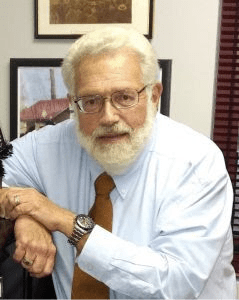
Tom Flynn died this morning. He was one of my authors back when I edited Free Inquiry magazine, and we worked on various projects together as he joined the Secular Humanist team we had there in Buffalo, NY thirty or so years ago. I liked him very much – always charming, always honest. A super can-do colleague.
We had a few back-and-forths after I moved on, and we followed each other on Facebook. Whenever Tom popped up in my timeline, my thought was always the same: “Well, Basil, now THERE is a man who really has the courage of his convictions. Pay attention.”
From my colleagues’ announcement:
The world has lost a towering figure of American freethought, a man who was both on the cutting edge of secular humanist thought, as well as the foremost caretaker of its rich history. The entire Center for Inquiry family is anguished by the sudden and unexpected death of our colleague, teacher, and friend Tom Flynn at age 66.
Tom held numerous leadership roles during his more than thirty years with the Center for Inquiry, most recently as editor of Free Inquiry magazine, director of the Robert Green Ingersoll Birthplace Museum and the Freethought Trail, and former executive director of the Council for Secular Humanism.
But this collection of titles does not nearly convey the plainer truth, which is that Tom Flynn was the beating heart of the Center for Inquiry and indeed the wider freethought movement.
A stark rationalist and staunch atheist if ever there was one, Tom was nonetheless brimming with enthusiasm, curiosity, bold ideas, and perhaps most of all, humor. He had a deep love and encyclopedic knowledge of freethought history and devoted himself to the preservation and rediscovery of American freethought’s great untold stories.
At the same time, he was a true visionary whose future-focused ideas about religion, atheism, equality, and the existential crises we face as a global civilization were once considered radical but now seem prescient. He was a virtuoso of the written word, penning not only countless articles and essays but also science fiction novels and the defiantly revelatory book The Trouble with Christmas.
Tom revelled in his various public personas, whether as a pugnacious stoker of controversy, a stubborn atheist curmudgeon (as with his infamous “Anti-Claus” alter-ego), or a wisecracking, avuncular coworker. But at his core, Tom was a man excited about big ideas, regardless of their popularity or public acceptance, and he was eager to share those ideas, bringing to them his unmatched combination of scholarship, eloquence, and humor.
“Tom didn’t believe in magic, but he was magical,” said Robyn E. Blumner, president and CEO of the Center for Inquiry. “How else to describe this unlikely combination of brilliance, charm, vision, and roll-up-your-sleeves accomplishment?”
“He saved the legacy of the Great Agnostic, Robert Green Ingersoll, from obscurity. He carried the torch for atheism, secular humanism, and clear-eyed rationality for decades with his powerful and copious writings and speeches—undoubtedly helping to cause the Rise of the Nones. All while cracking jokes and delighting everyone in his orbit,” said Blumner. “And how lucky we were to be part of it.”
“The death of Tom Flynn is a tragedy of epic proportions for everyone who cares about the equality of atheists anywhere in the world,” said Edward Tabash, veteran freethought activist and chair of the Center for Inquiry. “He was our conscience against religious bigotry. He was our conscience against irrational action and thought.”
“His razor sharp humor and wit were simply unmatched,” said Tabash. “The best way that we can honor Tom’s memory and all the magnificent work that he did is to continue to devote ourselves to ending religious bigotry anywhere and everywhere.”
To Tom’s wife, Sue, and to his family and friends, all of us at the Center for Inquiry join you in your grief. He was our family, too.
Tom’s hero, Robert Green Ingersoll, once wrote, “A great man does not seek applause or place; he seeks for truth; he seeks the road to happiness, and what he ascertains, he gives to others.” It will be a long time before there can ever be a full accounting of what Tom Flynn gave to all of us. Now Tom joins Ingersoll in what the Great Agnostic called “the perfect rest,” no longer as a mere admirer but as an equal.
I still can hardly believe the news. Sending condolences to his family and to all of the friends and colleagues we shared.
Bruce Adams
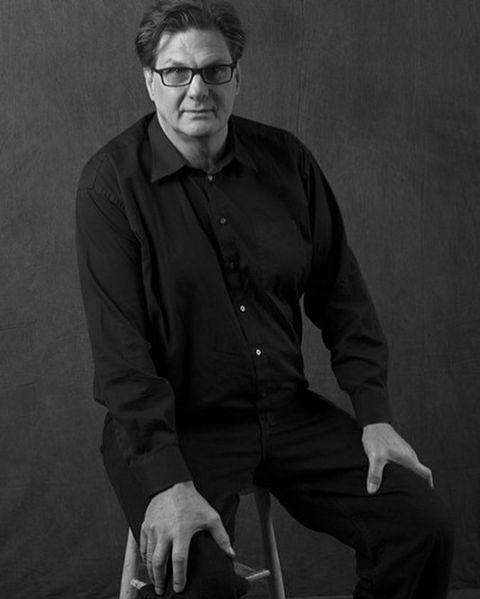
He was a lovely & congenial guy, and beloved in my old hometown. Here’s some of his artwork.
From the Hallwalls Contemporary Arts Center website:
To our strong and vibrant art community — in Buffalo and beyond:
Today, we lost one of the leading figures in our world — artist, writer, and art educator Bruce Adams.
Many of you know that Bruce was living and working with cancer since October 2020. A relentless creator and communicator, he continued to paint and publish his writing almost until the end.
Bruce’s family will be grieving the loss of their husband, father, uncle, brother, and grandfather on their own time and in private. Because Bruce was such a big part of our arts community, they have asked us to let you know how we can gather, mourn, and pay tribute to Bruce as an artist, writer, educator, and friend.
Bruce’s wife Renee has confirmed that if people are moved to make a donation in Bruce’s memory, please donate to Hallwalls Contemporary Arts Center. Bruce was a long-time member, and was president of the Board of Directors for many years. He often referred to Hallwalls as his church.
Hallwalls is also a place you can visit if you would like to spend some time thinking about Bruce. Beginning Saturday March 13th from 5PM to 9PM, and during Hallwalls gallery hours through April 16th, there will be a tribute sign at the building entrance, and inside there will be a small tribute exhibition and a book where you can sign and share feelings and memories.
If you would like to visit on the first day of the tribute exhibition, please reserve your time slot using this link. After that first day, Hallwalls’ gallery is open Tuesday-Friday, 11am-6pm and Saturday 11am-2pm.
Over the next year and a half, there will be retrospective exhibitions of Bruce’s extensive body of work. The legacy to be celebrated includes a collection of incredible paintings from 14 unique series, performances, and multimedia installations created over a period of 40+ years.
Bruce Adams was an uncompromising artist who was always proudly 100% from, about, and for Buffalo. We will miss him almost as much as he has impacted our world.
Thank you.
Edmund Cardoni, Elizabeth Licata, John Massier, Elisabeth Samuels, and Emily Tucker
The great Tom Toles retires
I had a chance to meet Tom Toles back when I was an editor at the University at Buffalo’s student newspaper, The Spectrum. Tom worked there a few years before me when he was a student and still contributed some of his caricatures from time to time while he was also drawing editorial cartoons for The (late) Buffalo Courier Express and the Buffalo Evening News (now the Buffalo News).
Later, Tom did covers for Free Inquiry magazine, which I edited in the late 1980s. (See cover below.) I believe he contributed his work for free.

Tom is an exceptionally cool man.
—
Update: Toles’ drawings in his university years tended to be more realistic than the editorial cartooning he did afterwards. Below is one of my favourite illustrations by Tom, of University at Buffalo “campus prophet” Michael Stephen Levinson, from 1973.

Happy to help
Leonard Bernstein died thirty years ago today. I always think of Stefan Bauer-Mengelberg on this anniversary. I wrote this ten years ago:
Twice in the last week I have helped to prevent a calamity from befalling a colleague. One colleague was irritated and the other was infuriated to receive my editorial help, though they each requested it. Both will come out “smelling like a rose” (to use an expression my Dad has always loved and that I now love, too).
In my last couple of years in book publishing back in the early 1990s, I spent more than half of my time, it seemed, addressing legal matters: Making sure that my authors weren’t going to get the company I worked for, Prometheus Books Inc., sued for defamation, libel, invasion of privacy, copyright infringement, and the like. Although I did not become an editor so that I could act as an ersatz lawyer, I did enjoy the role, especially because I got to talk to a REAL lawyer, and a great one, Stefan Bauer-Mengelberg, a lot.
Stefan provided his services for free, because he liked the books we published. He was a wonderful and brilliant and eclectic man, who reached the highest levels of accomplishment as a musical conductor and mathematician and teacher before starting his career in Law. I didn’t know he’d been a conductor until I called him one afternoon regarding a lawsuit. Leonard Bernstein had died the day before, and for some reason I brought that up with Stefan. “I was his assistant conductor for a year,” he said. “This sounds more impressive than it was. My main job was to have a cigarette lit and ready for Lenny when he came offstage.”
Back to my point: Because of Stefan Bauer-Mengelberg, many of my authors *didn’t* besmirch their reputations and *didn’t* get their butts sued. To a person, they were unhappy receiving the help they received, because they believed they didn’t need it. They all asked: What could go wrong?
A calamity is smaller than a comma when it’s born.
Remembering Stefan – and remembering my mentor Paul Kurtz, the difficult boss who introduced me to him – fills me with gratitude. Some very gifted people have shared their time with me.
The end in the beginning
A girlfriend once told me that I wrapped presents so poorly that no gift inside could overcome the offence I’d given by the mayhem of paper and tape on the outside. That was almost forty years ago. The sight of wrapping paper to this day makes me want to smoke crack.
A few Christmas seasons ago, I was in Buffalo with my partner staying with her family. The night before Christmas she took all of the gifts she’d sent to Buffalo in advance out of the boxes, so that she could wrap them here in our small bedroom. The room seemed an unshakeable chaos. There were sixty-two presents. I started to cry on the inside.
My beloved was in her element and conducted before me a symphony of wrapping. She saw no chaos. She saw the end in the beginning, perfectly appointed presents with delightful cards, never disorder, no antagonism between love and skill. Sixty-two marvellous gifts, given in love (successfully).
Genius sees no complexity. It sees the end in the beginning. We don’t. I don’t. We see a mess.
What needs to be done
My son, Miles, on race in the United States:
After welcoming my son into the world a little over a month ago I’ve felt my life change immediately. Every decision and every thought now goes into the wellbeing of our tiny boy. There is no doubt in my mind that I will spend my life ensuring that he is able to have every single chance and every possible advantage in life. I will do all that I can to protect his safety, to afford him every opportunity and to provide him with the most happiness a father can.
But it is hard to not consider one alternative reality: what if my son was black? On my walk through the NICU every day I pass multiple black children, each in the loving arms of their mothers. The thought that they will have less access to the same dreams and aspirations that I have for Colby is heartbreaking. Having a child in the NICU is terrifying enough on its own. I cannot even imagine being a parent of a black or brown child, knowing that the fight for life does not end after eventually leaving the hospital. This is devastating and wrong.
To be born in the United States is to be born into a racist nation. This is just a simple fact that is as American as fireworks on the 4th of July or apple pie. Our inability to come to terms with this simple truth, to live in denial, is to not acknowledge the smoldering fire that we as Americans refuse to extinguish.
Before the United States was even a nation, from the time the first Africans were forcibly relocated to our shores in 1619, America relied on the forced labor of a people whom were ripped from their homes and made to live painful lives of servitude. The writers of our constitution literally traveled with slaves as they wrote the words that so many Americans like to pound their chests to while reciting. Choosing not to address this hypocrisy in our founding documents is the first of many examples of Americans choosing to turn a blind eye to blatant atrocities. For the next 250 years, America (not just the South) benefited from this historically brutal practice. America was literally built on the backs of slaves whom lifted our country to a status she would have never achieved if not for the forced labor of a people who did not chose to be here. Our rise to a world power would have been impossible without this immoral source of labor.
And this was only the beginning. After “emancipation” the type of slavery only changed. Even Lincoln himself felt that freed slaves should be relocated to Africa as he saw no way for the mingling of two races—once again refusing to acknowledge a people’s inherent humanity. For the next 100 years blacks faced government sanctioned racism and terrorism. It wasn’t until the mid 1960’s that we as a country even started pretending to consider African Americans as equal. THE MID 60s! This means that for me, my parents still lived in a time in which blacks were legally discriminated against. The thought that all Americans are gifted the same inalienable rights is laughable and insulting to one’s intelligence. For the vast majority of our history from a colonial state to a modern country we weren’t even pretending to hide our racism.
After the end of the abhorrent practices of Jim Crow, we as a country decided to start decimating communities of color by locking generations in jail, by economically paralyzing an entire race, and by suppressing their right to vote for change. “Pick yourself up by your bootstraps,” Americans like to say. Blacks had their boots ripped off their feet in the 1600s and have been forced to walk barefoot for generations.
Are blacks the only group that have faced or faces significant discrimination in our country? Absolutely not. Poor white people, Latinos, Jews, and basically any immigrant group in our history have fallen under the cross hairs of discrimination within our boarders. As with most complex issues, there are multiple truths. Discrimination targets people of many creeds AND systemically and profoundly targets African Americans. The lives of poor white people matter AND Black Lives Matter. There are police officers that defend those whom they are sworn to protect and do so honorably. There are also those who are a product of 400 years of racist principles—fearing all blacks as criminals and ignoring our most basic tenant of presumed innocence—and target, harm, and murder African Americans in alarming numbers.
ALL of us, myself included, each have our blind spots and inherently racist tendencies. I’ve long felt blessed coming from an accepting family that I was immune to the white supremacy that plagues our nation. Fortunate enough to continue my education through medical school, I cherished meeting a diverse group of friends from all over the country and the world. “I’m above the problem,” I would think. “My eyes are open, and this is a problem for other less ‘woke’ Americans,” I ignorantly thought. This mentality is wrong, lazy, ignorant and a prime example of white privilege. I am a product of generations of hardworking ancestors whom with time have been able to improve the quality of life for subsequent generations of our family. This ability to accumulate generational wealth—part of the American dream– is a privilege so many blacks are not afforded. I was given the opportunity to work hard at a great college to get closer to a degree that would continue this trend of generational advancement, and I was able to do this while graduating from a state school with zero debt. Again, I began the race of adulthood before the starting gun was even shot while countless others are forced to start with their shoelaces tied together.
As we’ve been seeing this past week, it is no longer acceptable to not be racist. We must all be vocally anti-racist. This tactic is our only hope to erase centuries of pain we as a flawed country have collectively experienced. Each of us as individuals need to evaluate ourselves thoroughly and look for our own blind spots and to work to acknowledge and correct them. We as a society need to come together and demand change on a national level and on a human level. Not voting (in national, state, and local elections) is no longer an option. Addressing police brutality, mass incarceration, and income inequality are urgent issues that require our collective efforts. Ending voter suppression. Having a legislative body that reflects our population at large. Keeping an entire cohort of our society less healthy and more susceptible to chronic disease, as COVID has once again reminded us, is just another iteration of the same tactics we as a country have utilized for far too long. These are all enormous problems that will take an enormous effort by every single American.
Enough has to be enough. We all need to be better as humans and as a society. It starts by acknowledging hard truths and admitting that to be American means to share the original sin of systemic racism. As a new father, I refuse to let my son live in such an unjust world.
originally published on Miles Basil FB page
Feedback
A theme in all my orientation classes is the primacy of feedback in communication: how you give it, how you receive it.
When you gratefully welcome feedback into your life from colleagues, you grow as a professional, because you learn. When you usefully provide feedback to your colleagues, they get better as professionals, because they learn.
That’s why defensiveness and unfriendliness are killers when it comes to the work of communication.
A short while ago a friend forwarded me a short memoir written by Phil Mott, a mutual friend from our university years four decades ago. It covers this theme:
My girlfriend encouraged me to write and set me up with the Prodigal Sun editor [Bob Basil], the entertainment section of the paper. He assigned me a rather harmless assignment of reviewing the movie American Gigolo. I wrote the review and sat down with one of the editors to review the article. Bob was a kind-eyed soul with a talent for writing and an affection for the spirit of Jack Kerouac. His stories took him on wild trips riding rails and visiting the less fortunate of the world. He sat next to me with a red pen and wrote more in red than I had double-spaced typed. I was crestfallen. He wrecked me in ten minutes and crushed any dream that I ever had of writing anything but a to-do list ever again. He then looked up at me with a smile and told me “looks pretty good. I like it. You made some nice observations”. His support was greatly appreciated and kept me from jumping out of a window. He passed the review on to the copy department, red marks and all, and, just like that, I was a writer.
In giving me permission to reprint this passage, Phil wrote, “I would love it if my addled brain remembrance is of some use. Take it as a grand compliment that your advice stuck with me all of these years. It helped me give feedback to my own college students.”
“One to a customer.”

At Mercer Street Books and Records in lower Manhattan yesterday, I found this pamphlet Black Sparrow Press published way back when. It filled me with joy. Knowing Robert Creeley was a terrific blessing.
If I could just create the kind of world I’d really like to live in … *I* wouldn’t be there. “I” is an experience of creation, which puts up with it no matter. There’s a lot to get done. You’ve been born and that’s the first and last ticket. Already he changes his mind, makes the necessary adjustments, picks up his suitcase and getting into his car, drives slowly home. He lives with people whom he has the experience of loving. It all works out. He says. It has to. One to a customer. It’s late. But they’ll be there. He relaxes. He has an active mind.
Andy Herko

My friend Andy Herko – I guess you could call him my brother-in-law – passed away last week. He was only fifty years old.
I went back to Buffalo last weekend to attend his services, which were filled with love and stories. Andy was an exquisite man.
We shared some eccentric, generations-old musical tastes, one evening driving at least one relative out of his living room after playing Helen Reddy’s “I Don’t Know How to Love Him” a half dozen times.
Family members have set up a GoFundMe site in his honour “to help ensure that his daughter has financial assistance for her future success.”
Ken Catalino drew the amazing portrait of Andy.
Buffalo Seminary
A very fine school. (I hadn’t realized until my trip last week that Tara Vanderveer, the legendary Stanford women’s basketball coach, attended.) I took this photo on Bird Avenue near Elmwood. (Photoshopped.)

Finals
It has been slim pickings here at basil.ca the last while. Fall 18 was a very hectic semester. I added a major assignment to my upper-level professional communications classes, and I fit in two significant trips (one to Boston for my son’s wedding, and the other to the Kootenays to take care of my late friend Kat Kosiancic‘s things). I’ll be heading back to Buffalo to visit family and friends over the break and’ll be posting more before and during the trip. But before that: Final exams tomorrow!
You Are Here

I’ve been here many hundreds of times, across the water from Vancouver’s Science World, yet apparently I have never been fully here, as in ‘YOU ARE HERE’. How did I miss this great sign?!
My teacher and friend Robert Creeley titled at least eight of his poems “Here.” It was the title of one of his very last published poems:
Up a hill and down again.
Around and in –
Out was what it was all about
but now it’s done.
At the end was the beginning,
just like it said or someone did.
Keep looking, keep looking,
keep looking.
–
And here is one from “Hello,” a book from Creeley’s mid-career:
Since I can’t
kill anyone
I’d better
sit still.
.
‘People Explain Why Their Job Sucks in Six Words’
It is hard to imagine any job I have had that actually “sucked.”
I very much like my current job, an applied communications and marketing professor at Kwantlen Polytechnic University. This job has been hard, especially when I was the department chair, but it never actually “sucked.” I’ve taught at a few places; none of these teaching gigs could ever have sucked. That said, they were more-than-full-time jobs. Weekends were/are never off.
I was let go from Burger King at age 16 for somehow, weirdly, failing to put the fish filets on the fish filet sandwiches, but I actually liked that job, the pretty cashiers who were from my high school, the smell of the broiled burgers, the record store across the mall hallway.
I worked for Paul Kurtz. He was hard to work for, and rough. But he was wise and helped people’s careers including mine. The job did not suck. Though it ruined some mornings, afternoons, and evenings.
I worked for myself at Basil Communications Inc. That job did not suck, but my boss had issues.
My managers at Your Host (graveyard shifts) and Mighty Taco (more graveyard shifts, but with slightly drunker people) in Buffalo in the late 1970s were estimable and … thank you very much, managers, from this point in the future; my time at your workplaces definitely did *not* suck. It was, instead, charming, thoroughly. And I wrote a lot on the job and then after I ran home, loving memories and scenes and the exercise. (I had so much energy!)


 RSS - Posts