Archive for School
The summer term
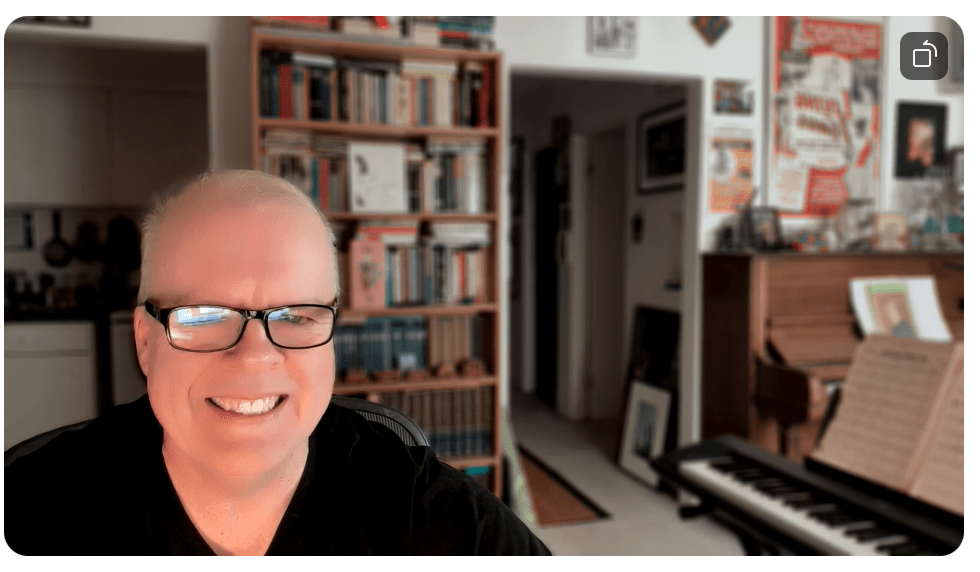
I’m teaching my “Mass Media & Society” course this summer at UCW. More than my other courses, this one needs to be updated from term to term, which happily requires I come up with some new activities and topic modules. Here’s hoping they’re all engaging and edifying!
Fall teaching
I’m all revved up, for two professional communications classes (a requirement for students seeking their BBA’s in business) and one forlornly named “Technical Report Writing” class (primarily for students in the social sciences, but all are welcome). Over my August break, I made a few nifty revisions to the curricula.
Apropos: To those friends whom I tried to impress, earlier this summer, by claiming that the word “nifty” derived from “magnificent” – I apologize. The evidence wasn’t as solid as I had thought!
An editor’s help

An autumn evening, 1979: I was visiting the office of my university’s student newspaper to say hello to my colleagues. Joe Simon, the managing editor, was there. He told me he liked this week’s “Phaedrus,” my regular column, scheduled to appear the next morning. “I changed one word,” he said. “You said a woman’s lips were chartreuse.” Joe had a dictionary on his desk, open to C. I looked. “I trust you meant ‘ruby red.'”
I sure did.

“don’t condescend to the adults in your life, as a rule”
Linda Tirado is why I can never quit Twitter.
Y’all. My child. Has just told me. She can’t write an apology because she doesn’t know “what to write besides fuck you.” I have never been prouder and I can’t laugh because this is Very Serious Imagine in ten years when she’s protesting tho …
Students
Yesterday and today I have been viewing short videos that students in my three summer classes made about their projects. This has been the first time I have seen their faces or, for most of them, heard their voices. It has been an emotional experience.
Some help for Kwantlen students during the pandemic
A message from my university:
The Kwantlen Student Association [KSA] has donated $100,000 in emergency funding for students at Kwantlen Polytechnic University. To match this generous gift, KPU will also donate $100,000.
“The KSA always strives to represent its students, and we hope that with this donation, we can give students financial assistance to reduce financial hardships they might face due to COVID-19,” says David Piraquive, president of the KSA.
The funds will be available from March 30 to any student registered for the Spring 2020 term. Students are eligible for up to $250.
“During these unprecedented times, many people will face financial hardships and this includes KPU students. We are deeply grateful to the KSA for this generous gift, and we are proud to partner with them in this effort by matching their donation. Our collective efforts will help our students financially as they try to navigate the current situation,” says Dr. Alan Davis, president and vice-chancellor of KPU.
For students who require more emergency funding, there are other grants and bursaries available to students who meet specific criteria. For more information about student financial aid and to apply, visit kpu.ca/awards.
Additional message tweeted me from KPU:
Students can begin applying March 30, closer to the end of day. There will be a form on http://kpu.ca/awards. For more information please contact the student aid office.
I’ve sent this out to all my current students directly – and posted the message here for my former students who follow basil.ca.
“pure capitalist intent”
This tweet by Kwantlen Polytechnic University colleague and marketing instructor @AndreaNiosi is my April favourite:
Showing my students the dark side of marketing. Cultural appropriation, mis- & under-representation, stereotypes, & the pure capitalist intent lurking behind (some) cause marketing campaigns. I’m now writing an open book to go as deep as I can into this.
Kwantlen students helping Syrian refugees in BC
For their practicum, several former students of mine in KPU’s Bachelor of Business in Marketing Management program have formed C.A.R.E. (Community Aid & Relief Efforts) Kits,
a student run endeavour eager to aid the Syrian refugees settling in British Columbia. As fourth-year marketing students at Kwantlen Polytechnic University entering into practicum, we wanted to help make a difference in our community.
Our amazing team has put together care packages, also known as “kits”, filled with basic necessities that families and children will need once they arrive in Canada. Each kit that is sold will be delivered and stored with a partnering community outreach program here in Surrey. Once our new neighbours arrive, our kits will be distributed by our partnering organization. And because we are all about giving back, our entire proceeds made from all kits sold will be given back to Kwantlen’s Bachelor of Business Administration in Marketing Management (BBAMM) Scholarship Fund.
I know five of the six students running this project very well. They’re tops.
KPU’s Scholarship Fund has long been close to my heart. I’ve seen first-hand how it helps students – many of whom are immigrants themselves – stay in school, pay the rent, and lessen their debt load. (I’ve been funding two scholarships – The Maureen and George Basil Award and The John Reiss Award in Journalism – for many years.)
My Favourite End-of-Year List
The Ten Worst (and 5 Best) Free-Range Kids Moments of 2015. With this nifty Catholic School entry: Six-Year Old [at Our Lady of Lourdes Elementary School] Suspended for Playing with Imaginary Bow and Arrow.
Elementary
The source of my greatest anguish, St. Paul’s School, in Wellesley, Massachusetts, closed down this year. I found out yesterday. Part of me felt relief. A bigger part felt ill. The biggest part felt anger, that the school died before I could get even (so to speak).
My “shadow CV”

Regarding Devoney Looser’s ‘Chronicle of Higher Education’ article “Me and My Shadow CV: What would my vita look like if it recorded not just the success of my professional life but also the many, many rejections?” my friend Jonathan Mayhew writes,
Nobody cares about your list of rejections and failures. When I first saw the title of this essay I thought it would be about something much more interesting: the parts of the scholarly formation that seem less scholarly but that somehow affect one’s writing: my study of jazz and percussion, my obsession with prosody: all the things I never wrote about but that are essential to who I am: for my friends, it could be their work as zen masters, or being in a band: the translations someone has worked on but not published.
The point the article is trying to make is that we see a cv loaded with stuff but don’t see the rejections and failures that everyone experiences. The longer the cv, the longer the shadow cv too, because someone more active will also have more opportunity not to get grants they apply for. Everyone knows this, so it’s supposed to be great for younger people to see that these successful people have also failed. I get the point, but it is a stupid article because it is not the one I would have written with this title. (Sorry.)
My shadow CV would certainly include a long section on hitchhiking, an obsession of mine for several years during which I learned how to talk with many different kinds of people. (When I graduated from SUNY/Buffalo no one – friend, family, or foe – believed me when I told them, with the exception of my then-future, now-former wife, because I seemed to have spent more time on the road than on campus – or in New York state, for that matter.)
Also on my shadow CV would be my study of the piano (thank you, Mom and Dad, for the lessons and for the summer music camps). I feel my devotion to that instrument pouring into my palms as I type this. After I broke the pinky of my right hand in a stupid fight when I was in eleventh grade – it was poorly reset – my repertoire and record collection for several years thereafter focused almost exclusively on jazz. (I named my son after Miles Davis.) Now I play all kinds of things – this week it’s Arvo Pärt, some old hymns, always some Bach, and some easy & winsome pieces by a fellow named Charles Koechlin.
A third section would have to describe my study of radical politics and conspiracy theories, to which I was introduced, as most of us are, I would guess, in our young university years. It became an interest, and then a hobby, while I was on the road riding shotgun and listening to drivers talk about UFOs, the Illuminati, the CIA, JFK, Jonestown, and lizard people, and those secret and super-powerful, super-rich cabals controlled by Mormon or Catholic or Jewish magnates (or by the British Royal family!). When the drivers got tired of talking, we’d listen to the radio and learn even more. I went from hobbyist to serious amateur while putting together my book on the New Age movement. My correspondence with people in far out religious movements tended to be very vivid, to say the least, and I treasure it to this day. I never became a believer in the conspiracies, or in the religions, alas – not that I ever wanted to – though I do prefer the grand verbal edifices they produce to fictions like novels, and by a wide margin. (My favourite “researcher” is Dave Emory.)
Not really insomnia
I can never sleep before my day of classes. I can’t watch TV. I can’t listen to music. I can’t even think about my classes. I just stay awake, knowing that something important will happen soon.
Kwantlen Polytechnic University …
… in the news. I would prefer to see stories that describe our sedulous teachers and students. That said, this is real news. (I will leave it at that.)
Blasts from the past

Way, way back in the day, I spent a year as Books Editor at The Stanford Daily. It was a wonderful experience doing campus journalism alongside my graduate school studies. Recently the publication put the entirety of its archives online. Stanford Magazine explains how this was accomplished.
Typing my name into the search engine doesn’t locate my entire oeuvre, but keystroking “Bob Basil” does find my loving tribute to the band Katrina and the Waves as well as my take on Sam Shepard’s “Fool for Love.” “Robert Basil” will get you my discourteous take-*down* of Cynthia Ozick, which still embarrasses me.
Carl Djerassi, RIP

Carl Djerassi
Known as “the father of the birth control pill” – an odd phrase, when you think of it – Stanford University professor Carl Djerassi was a genius in many areas of chemistry, authoring or coauthoring more than 1200 scientific papers. After he turned sixty, he turned to writing novels and plays, with great success. (I remember a number of my colleagues in the English department at Stanford being, well, a tad bit jealous.)
He was famously immodest – without, somehow, being arrogant. He mentored generations of scientists and, as a philanthropist, supported artists for decades.
I met professor Djerassi through my Stanford advisor, the wonderful Diane Middlebrook, his wife. Diane once told me that one of Djerassi’s great qualities was that he did not react to – perhaps did not even *notice* – her moods, and hence wasn’t adversely affected by them – so she never had to feel guilty *having* them. (I knew where she was coming from.)
Their home – an entire floor (the 14th?) of a Russian Hill apartment building in San Francisco – was filled with modern art by likes of Paul Klee and Alexander Calder. Once, when the couple was in London, Diane invited me to stay there for a week. I was so afraid I’d bump into a million-dollar painting or mobile, I stayed in the kitchen and bedroom my first couple of days there. Diane had a desk that looked out onto Alcatraz. That’s where she wrote her biographies of Anne Sexton, Billy Tipton, and “the marriage” of Ted Hughes and Sylvia Plath. (I was very honoured indeed to be asked by Diane to copy-edit the first draft of the Tipton bio, Suits Me: The Double Life of Billy Tipton.)
Diane passed away eight years ago. I honestly can’t believe it has been that long. Her wisdom and sweet courtesy were legendary. I am grateful to professor Djerassi for being a great husband to her, and grateful, too, for the gifts – his inventions, his research – that have improved the lives of millions and millions of people the world over.
Thank you both.
(The photograph above, appearing in the Stanford Report’s nicely composed obituary, was taken in Diane and Djerassi’s huge library. By delightful luck, right above the great chemist’s right elbow is a copy of my first book.)
Revision : Heterovision
I tell students and clients they shouldn’t take feedback on their work as personal critiques. “You are not the words on the paper on which your reports are printed.” This seems like a straight-forward point, but even seasoned editors tend to forget it on occasion, so I tend to make it a lot. “What we have in common is our concern for the usefulness of this prose here, this separate and individual bit of existence that is neither you nor me.”
—–
The word “revision” comes from Latin word revisionem, meaning “to see again.” While an author and an editor might look at a single work of prose more than once, often the work itself needs to be seen, amended, and fixed by other stakeholders and document contributors as well (lawyers, accountants, scientists, project managers, executive assistants), folk who will look at this work of prose just once. What these latter individuals are doing is not, strictly speaking, “seeing again.”
So, perhaps we need a new word to explain what our written works really and more precisely need, over and above “revision.” I suggest heterovision – meaning “seen by others” (hetero- coming from the Greek for “other” or “different”). This neologism conveys the collaborative aspect of editing better than the word “revision” does. (Analogous expressions would be heterodoxy and heteronym.)
In sum: While the work itself is looked at again (“revised”), the people who do the fixing, who proffer their critiques, are usually heterovising.
(Could our nifty neologism catch on? I am not betting on it. The prefix “hetero” seems rather charged in our language at the moment, connoting culturally normative and uniform values, I think, rather than what’s inclusive, alternative and welcoming. And editing’s nothing if not “welcoming.”)
—–
Note: An earlier version of this post appears in nocontest.ca.
Problems with the “bucks for clicks” model of journalism
I like Virginia Postrel‘s take on the recent controversy over at Forbes.com. A popular author, Bill Frezza, published a controversial column on that website – advising university fraternities to beware of female students who show up at their parties drunk – and was fired. Comments Postrel:
What has drawn little comment is the business model that produced a journalistic fiasco. Forbes.com (not to be confused with the print magazine) is a publication that acts like a platform. It hires columnists, gives them a general turf, tells them to write and post pieces, and pays them by how much traffic they attract. Unlike a traditional publication, it doesn’t spend money on having editors review the topics or articles beforehand.
In the traditional model, Frezza’s article either would have had the backing of the publication–which would have stood up for it–or it would have never seen the light of day. If the argument seemed beyond the pale, an editor would have said, “No thanks. What else do you have?” There would have been no public blowup and no firing. One way or another Forbes.com would have taken responsibility. (As anyone who reads Forbes.com knows, its lack of editorial oversight extends to basics of proofreading.) Forbes.com’s business model has been successful in a tough environment, but it presents editorial perils.
Under the new model, columnists have to guess what readers will find interesting and they also have to guess what editors will find a firing offense. They are expected to internalize vaguely defined standards and self-censor accordingly.
—–
Addendum: Other, very bad problems with this model: (1) Authors are financially punished for writing stories that take a long time to report or that are important-but-boring; (2) livid, invidious opinion is likely to generate more “clicks” than researched journalism; (3) writers must now aim to please rather than to inform their readers.
Back in the day, Sports sections, for example, subsidized important-but-boring stories about school-board meetings and treaty negotiations among Asian nations. No more, alas. – 18 October
Kwantlen’s Compensation Controversy
There have been four presidents of Kwantlen Polytechnic University since I was hired eleven years ago. Our current one, Dr. Alan Davis, seems to me to have been the best. Why? He understands how our university’s future will never be a break from its past: a community-focused, rigorous institution devoted to providing students with real-world expertise – from fashion and interior design to horticulture to business to criminology and, now, even to beer-brewing and to Chinese medicine.
He has been a superb hire. In his previous post – president of the State University of New York’s prestigious “university without walls” – he demonstrated his commitment to cool and interesting innovations, humanism, and technology.
How Dr. Davis got hired is not controversial, but how he got paid *before* he started his job as President has. Today he released this statement:
Colleagues,I am very troubled by aspects of administrative compensation at KPU that have recently come to light. It is clear that, prior to my arrival at KPU, there was an established pattern of issuing pre-employment consulting contracts to people being hired to senior positions. The recipients of those contracts, including myself, were unaware that these contracts might be non-compliant in some way with BC public sector regulations.Assistant Deputy Minister Rob Mingay found in his recently released Compensation Review of Kwantlen Polytechnic University that the mis-reporting of two of those contracts (including my own) was not in keeping with the spirit and intent of government standards.Similar conclusions could be drawn about other such contracts that were issued before my arrival.I am therefore conducting a review of these issues, using independent external resources as required.
Kwantlen to Open Campus #5

My fine university made a big announcement today. Here is the school’s news release:
Kwantlen Polytechnic University (KPU) will expand its commitment to the region south of the Fraser with a 30,000 square foot (almost 2,800 square metre), three-storey site dedicated to professional development, business and innovation at 3 Civic Plaza in Surrey City Centre.
President and Vice-Chancellor Dr. Alan Davis announced today that KPU plans to reinvigorate the educational experience in Surrey with a roster of new programs that meet the needs of industry, business and professionals in Metro Vancouver’s latest downtown core.
“Kwantlen was born from the need to provide relevant post-secondary education to the South Fraser Region. For the past 32 years, we have grown to serve more than a quarter of a million students. But KPU’s vision is to be bigger, bolder and better. KPU Civic Plaza is just that,” said Davis.
Expected to open early 2016, KPU Civic Plaza plans to deliver professional studies, upper-level business courses and post-graduate credentials in downtown Surrey, from a location with excellent transit and SkyTrain access, on a hotel and residential site that can accommodate professionals from throughout the region.
The centre is also envisioned to become a hub for community engagement, collaboration and connection between researchers and Surrey’s health and technology sectors on Innovation Boulevard. From City Centre, KPU will lead the landscape of urban education, championing the entrepreneurial spirit that has led Surrey to become the largest city in Metro Vancouver, and the second largest in the province.
“With one-third of Surrey’s population under the age of 19, the new KPU Civic Plaza is an excellent example in how the City of Surrey is reaching out to meet the needs of our future leaders,” said Mayor Dianne Watts. “Once complete, the KPU Civic Plaza will begin by bringing more than 1,600 students each year into our downtown core, which falls in line with the City’s vision for the area. I like to welcome the students and staff of Kwantlen Polytechnic University to the heart Surrey City Centre.”
KPU Civic Plaza will expand on the traditional academic day and year, with community-oriented, short-term and direct professional development programming to be offered throughout the entire calendar year – on weekdays, evenings and weekends. Initially, Surrey’s largest and longest-serving university will accommodate over 1,600 students in a district filled with companies charging the city’s business, economic and social sectors.
“KPU is a perfect fit with 3 Civic Plaza. I can already imagine the students adding to the sense of community. KPU will be at centre ice of the new City Centre,” said Sean Hodgins, President of Century Group, the developer behind Surrey City Centre’s iconic plaza.
Proposed programs include graduate diplomas and certificates in: strategic planning, media and communications, public relations, emerging markets analysis, product development, management sciences, accounting, human resource management, financial analysis, specific business applications, and professional standards.


 RSS - Posts