Archive for publishing
“Where the Sagebrush Grows”

Brittany Bronson’s review of my friend John Glionna‘s book, “Outback Nevada: Real Stories from the Silver State,” really captures Glionna’s gifts and the heart of his charming, striking feature writing.
Most of Nevada’s land — almost 86 percent — is uninhabited by people, covered in sagebrush, and managed by the federal government. That leaves plenty of room for the imagination. Green corporations envision wind farms. Red politicians see a dumping grounds for the nation’s nuclear waste. Even for those who have driven one of those two-lane highways stretching across high desert, it is still easy to assume that there is nothing, and no one, out there.
John M. Glionna sets out to prove the opposite in Outback Nevada: Real Stories from the Silver State, a collection of reported essays profiling the inhabitants of “the real Nevada.” Written between 2013 and 2021, the essays span the rise and fall of President Donald Trump, a worsening drought, and a global pandemic. Glionna lets his subjects serve as the narrators, comedians, and political commentators, and his cast of characters is well curated. They disrupt any assumptions of Nevada as a culturally homogeneous place.
The book’s 45 subjects include a Catholic priest who conducts mass in casinos; elderly best friends who have outlived their cowboy husbands; a Shoshone activist who uses art to comment on the environmental impacts of mining; the Thunder Mountain Indian Monument; and the daily police blotters of the state’s smallest towns, full of “scandal, buzz or scuttlebutt.”

Linda Tirado reflects

This is an excellent interview by WCCO Channel 4 in Minneapolis with author / reporter / photographer Linda Tirado, who was blinded in one eye after being shot by a police offer during a 2020 demonstration in that city. Tirado is both purposeful and poignant here – and instructive; she always wants to teach … and *to show people how*. You will be surprised by some of what she says. (Click on the image to see the video.)
20 years of basil.CA
This week basil.CA celebrates its twentieth anniversary. With some variations, I’ve kept the four-column format used from the beginning (thank you for the inspiration, Arts & Letters Daily!). The main change over the years: Once I shuttered Basil Communications Inc., I wrote about business and the market (and political controversy) a good deal less.
Between 2002 and 2022 I’ve used basil.CA not only as a blog but as a hub connecting to a range of projects: No Contest Communications, my iPhone Blog, photography (general and “straight up“), and … various … other … thingamabobs.
I’m grateful to my readers for swinging by. I’ve tried to keep the place tidy but filled with whatnots to look at and think about, as if you were visiting my apartment as a guest.
Tom Flynn
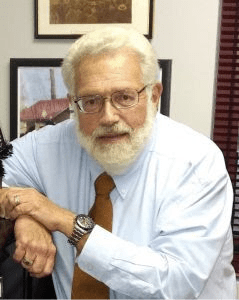
Tom Flynn died this morning. He was one of my authors back when I edited Free Inquiry magazine, and we worked on various projects together as he joined the Secular Humanist team we had there in Buffalo, NY thirty or so years ago. I liked him very much – always charming, always honest. A super can-do colleague.
We had a few back-and-forths after I moved on, and we followed each other on Facebook. Whenever Tom popped up in my timeline, my thought was always the same: “Well, Basil, now THERE is a man who really has the courage of his convictions. Pay attention.”
From my colleagues’ announcement:
The world has lost a towering figure of American freethought, a man who was both on the cutting edge of secular humanist thought, as well as the foremost caretaker of its rich history. The entire Center for Inquiry family is anguished by the sudden and unexpected death of our colleague, teacher, and friend Tom Flynn at age 66.
Tom held numerous leadership roles during his more than thirty years with the Center for Inquiry, most recently as editor of Free Inquiry magazine, director of the Robert Green Ingersoll Birthplace Museum and the Freethought Trail, and former executive director of the Council for Secular Humanism.
But this collection of titles does not nearly convey the plainer truth, which is that Tom Flynn was the beating heart of the Center for Inquiry and indeed the wider freethought movement.
A stark rationalist and staunch atheist if ever there was one, Tom was nonetheless brimming with enthusiasm, curiosity, bold ideas, and perhaps most of all, humor. He had a deep love and encyclopedic knowledge of freethought history and devoted himself to the preservation and rediscovery of American freethought’s great untold stories.
At the same time, he was a true visionary whose future-focused ideas about religion, atheism, equality, and the existential crises we face as a global civilization were once considered radical but now seem prescient. He was a virtuoso of the written word, penning not only countless articles and essays but also science fiction novels and the defiantly revelatory book The Trouble with Christmas.
Tom revelled in his various public personas, whether as a pugnacious stoker of controversy, a stubborn atheist curmudgeon (as with his infamous “Anti-Claus” alter-ego), or a wisecracking, avuncular coworker. But at his core, Tom was a man excited about big ideas, regardless of their popularity or public acceptance, and he was eager to share those ideas, bringing to them his unmatched combination of scholarship, eloquence, and humor.
“Tom didn’t believe in magic, but he was magical,” said Robyn E. Blumner, president and CEO of the Center for Inquiry. “How else to describe this unlikely combination of brilliance, charm, vision, and roll-up-your-sleeves accomplishment?”
“He saved the legacy of the Great Agnostic, Robert Green Ingersoll, from obscurity. He carried the torch for atheism, secular humanism, and clear-eyed rationality for decades with his powerful and copious writings and speeches—undoubtedly helping to cause the Rise of the Nones. All while cracking jokes and delighting everyone in his orbit,” said Blumner. “And how lucky we were to be part of it.”
“The death of Tom Flynn is a tragedy of epic proportions for everyone who cares about the equality of atheists anywhere in the world,” said Edward Tabash, veteran freethought activist and chair of the Center for Inquiry. “He was our conscience against religious bigotry. He was our conscience against irrational action and thought.”
“His razor sharp humor and wit were simply unmatched,” said Tabash. “The best way that we can honor Tom’s memory and all the magnificent work that he did is to continue to devote ourselves to ending religious bigotry anywhere and everywhere.”
To Tom’s wife, Sue, and to his family and friends, all of us at the Center for Inquiry join you in your grief. He was our family, too.
Tom’s hero, Robert Green Ingersoll, once wrote, “A great man does not seek applause or place; he seeks for truth; he seeks the road to happiness, and what he ascertains, he gives to others.” It will be a long time before there can ever be a full accounting of what Tom Flynn gave to all of us. Now Tom joins Ingersoll in what the Great Agnostic called “the perfect rest,” no longer as a mere admirer but as an equal.
I still can hardly believe the news. Sending condolences to his family and to all of the friends and colleagues we shared.
Larry King
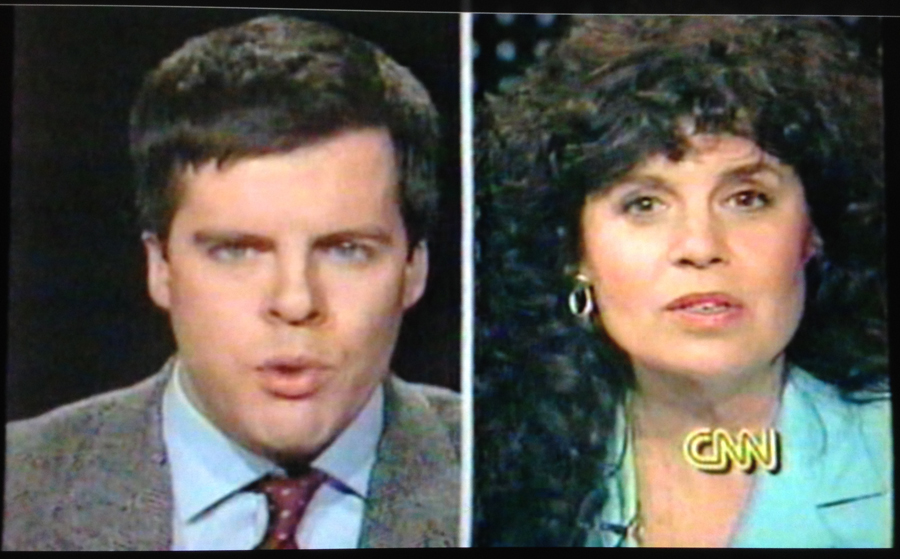
Back in 1988 I appeared on CNN’s Larry King Live! to debate the topic of Near Death Experiences (NDE’s). I was given the role of the skeptic. To me that meant I was there to offer explanations for this very real-feeling sensation that were neither paranormal nor religious. My goal was to “save” the experience rather than “debunk” it, offering a more scientifically sound way of describing the NDE.
The woman sharing the split-screen with me here is Barbara Harris-Whitfield. Considering how pointed my remarks were on that show, she was very forbearing and generous with me. Indeed, after our appearance on Larry King she asked producers of other shows to ask me on to be her debating foil. (We even travelled to Cincinnati to be on an early version of The Jerry Springer Show, which was not the gong-show it would become but which nonetheless sure did encourage ill manners.) Barbara showed me how to be somewhat kinder to others when I argued with them, and she taught me that lesson without embarrassing me. I think of her often, with gratitude.
A word about Larry King. Back in the eighties, the discussion on Larry King’s show could be a good deal more elevated than what people saw in his later years at CNN; there were fewer commercial interruptions as well. To me, though, King’s finest years as an interviewer came when he was on the radio at night in the seventies. He knew everything and everyone and the conversations could really spread out. His curiosity was unquenchable, and he alleviated the isolations of insomnia among his listeners. It seemed he never failed at that. RIP, Mr. King.
The great Tom Toles retires
I had a chance to meet Tom Toles back when I was an editor at the University at Buffalo’s student newspaper, The Spectrum. Tom worked there a few years before me when he was a student and still contributed some of his caricatures from time to time while he was also drawing editorial cartoons for The (late) Buffalo Courier Express and the Buffalo Evening News (now the Buffalo News).
Later, Tom did covers for Free Inquiry magazine, which I edited in the late 1980s. (See cover below.) I believe he contributed his work for free.

Tom is an exceptionally cool man.
—
Update: Toles’ drawings in his university years tended to be more realistic than the editorial cartooning he did afterwards. Below is one of my favourite illustrations by Tom, of University at Buffalo “campus prophet” Michael Stephen Levinson, from 1973.

Happy to help
Leonard Bernstein died thirty years ago today. I always think of Stefan Bauer-Mengelberg on this anniversary. I wrote this ten years ago:
Twice in the last week I have helped to prevent a calamity from befalling a colleague. One colleague was irritated and the other was infuriated to receive my editorial help, though they each requested it. Both will come out “smelling like a rose” (to use an expression my Dad has always loved and that I now love, too).
In my last couple of years in book publishing back in the early 1990s, I spent more than half of my time, it seemed, addressing legal matters: Making sure that my authors weren’t going to get the company I worked for, Prometheus Books Inc., sued for defamation, libel, invasion of privacy, copyright infringement, and the like. Although I did not become an editor so that I could act as an ersatz lawyer, I did enjoy the role, especially because I got to talk to a REAL lawyer, and a great one, Stefan Bauer-Mengelberg, a lot.
Stefan provided his services for free, because he liked the books we published. He was a wonderful and brilliant and eclectic man, who reached the highest levels of accomplishment as a musical conductor and mathematician and teacher before starting his career in Law. I didn’t know he’d been a conductor until I called him one afternoon regarding a lawsuit. Leonard Bernstein had died the day before, and for some reason I brought that up with Stefan. “I was his assistant conductor for a year,” he said. “This sounds more impressive than it was. My main job was to have a cigarette lit and ready for Lenny when he came offstage.”
Back to my point: Because of Stefan Bauer-Mengelberg, many of my authors *didn’t* besmirch their reputations and *didn’t* get their butts sued. To a person, they were unhappy receiving the help they received, because they believed they didn’t need it. They all asked: What could go wrong?
A calamity is smaller than a comma when it’s born.
Remembering Stefan – and remembering my mentor Paul Kurtz, the difficult boss who introduced me to him – fills me with gratitude. Some very gifted people have shared their time with me.

John Glionna

My dear friend is an endlessly creative and resourceful writer. His recently launched website is a treasure.
Friendships, my own + Ginsberg & Kerouac’s
I received a note from a dear old family friend the other day.
I wouldn’t have noted it, but one of the sites I peruse (“LitHub”) had a piece that last Monday was the 50th anniversary of Jack Kerouac’s death. Which means he’s been gone longer than he was here. Apparently, the town of Lowell had a small ceremony. I saw a photo of the grave where some folks had thoughtfully left a couple of bottles of booze. (Or thoughtlessly? He died of alcoholism.) I suppose they should also have a left a copy of [the conservative magazine] National Review.
I am reminded, once again, of the beautiful song “Box of Rain,” by Phil Lesh and Robert Hunter (RIP): “Such a long, long time to be gone; but a short time to be there.”
I replied:
I believe he and [National Review publisher] William Buckley were friends, actually. (One thing about both of them – they had gifts for friendship, Buckley getting an extra bonus point for being friends with his antagonists, too, for the most part.)
My feelings toward Kerouac have gone up and down over the years. He is unique in the Robert Basil pantheon in that respect, where once you’re in, you’re in for good (Barthes, Henry James, Flannery O’Connor, William Carlos Williams …). I once made a disparaging remark about Kerouac’s poetry to a close friend of mine (a Garcia-Lorca scholar and a poet himself), and he gently chided me, taking me through some of Kerouac’s poems phrase by phrase, waking me back up. Kerouac’s prose, it must be said, relies on some vocabulary crutches in ways his poetry doesn’t – but so many of his books are nonetheless absolutely splendid. (I taught Dharma Bums while I was at Stanford.)
And finally, he really really inspired me as a writer. The first Kerouac book I owned was a copy of The Dharma Bums that [my brother] Chris gave me – I must have been 19 or 20. I read about half of it sitting in the back of a pick-up truck zooming down route 17 to Manhattan, surrounded by fall foliage. One of my happiest memories.
To celebrate my graduation from university – this was a solitary activity, because literally *nobody* other than my girlfriend believed I had somehow graduated from college, having dropped out so often and, when actually enrolled, having spent almost as much time hitching around the country as attending classes – I read “On the Road” for the fourth or fifth time, cover to cover, back to front (how I read novels), drinking Miller Beer “ponies” and lying in bed, finishing at dawn. Another one of my happiest memories.
I want to share with you a quite moving piece from the New Yorker: “Allen Ginsberg: The Day After Kerouac Died.” It annotates some journal entries and a poem from “The Fall of America.” (My friend and teacher Robert Creeley makes a few appearances.)
The New Yorker / Allen Ginsberg piece brought some tears.
Memory Gardens
Covered with yellow leaves
in morning rain …
He threw up his hands
& wrote the universe don’t exist
& died to prove it. …
… Jack thru whose eyes I
saw
smog glory light
gold over Manhattan’s spires
will never see these
chimneys smoking
anymore over statues of Mary
in the graveyard …
Well, while I’m here I’ll
do the work –
and what’s the work?
To ease the pain of living.
Everything else, drunken
dumbshow.
Shakespeare’s Sister retires
Feminist Melissa McEwan’s blog Shakesville [originally called “Shakespeare’s Sister”] has been around for almost as long as this site, though she has always been much more prolific. Her blog also created its own intelligent, progressive community of readers and commenters. I’m sad McEwan has called it quits.
After nearly 15 years, exactly one-third of my life, I am moving on from Shakesville. …
I love this community. I love writing for you. I love the research and the silly photoshops and crafting nerdy political jokes. I love talking about our individual lived experiences and learning from you. I love helping people find and access resources, or figure out a tough problem, in private communications. I love seeing pictures of your faces, your kids, your pets. I love making you laugh, and I love how often you make me laugh.
I don’t love the nature of the content about which I’ve been writing, especially these last couple of years. But even that would be tolerable, if it weren’t for everything else that I am obliged to navigate as part of being a fat feminist woman writing in public. I don’t need to recount it. You’ve seen enough to know that it is a steep cost, and it turns out that even I have limits. I have reached them.
The truth is that I reached them a long time ago, and I stayed far longer than I should have, and now I’m paying the price with both my psychological and physical health.
So I’m going to go take care of myself. I don’t know what’s next after that. I’m frankly pretty scared, because I’ve been doing this for a long time and it’s a huge part of who I am. It is very difficult to let go.
Godspeed, Melissa. And thank you for your work.
h/t Clarissa
A Bargain!

I didn’t know until last week that there was an Indian edition.
It was a fun project written with a dear friend.
Saving your name
The “Naked Security” blogs published by Sophos remind me how vigilant online publishers – and all organizations, really – have to be to protect their content, their data, even their names. Indeed, the word “vigilance” needs to at the top of our whiteboard every day – and never erased.
When I moved to Vancouver in 1996, I saw that almost no small-cap companies in the exploration and mining business had online presences. This was a good business opportunity. I knew my way around the Internet – coming from Stanford, you had to be – but hadn’t created websites myself. I found a couple of partners who did, and we found a bunch of clients right away.
The first order of business was registering URLs for each client. This typically involved registering four or five: client.com, client.net, clientresources.com, clientresources.net, and clientinvesting.com, for instance. We wanted to make sure that we covered the bases, so to speak. We would use the main URL and make sure that the others “pointed to” the main one.
For a couple of years, on the Internet there was the equivalent of the 19th-century American land rush. Promoters, IT whizzes, managers, communications pros, publishers, inventors, entrepreneurs – everybody, it seemed to me – were staking out their claims to URLs, in essence buying names and making them their own. Whether or not these names were used for actual websites, for some it was just as important that their competitors *didn’t* have these names.
I have a spreadsheet to make sure that I never forget to re-register the “stable” of URLs I own or manage (a few dozen). Two times I missed a deadline; I lost one URL (this still bugs me, as you can imagine) and *miracle of miracles* I got the other one back.
Forgetfuless is one way to lose control of your URL. Having it stolen is another. The other day Sophos blogger John E Dunn published an article called “US gov issues emergency directive after wave of domain hijacking attacks.”
The US Department of Homeland Security (DHS) has issued an emergency directive tightening DNS security after a recent wave of domain hijacking attacks targeting government websites. …
Domain hijacking has been a persistent issue in the commercial world for years, a prime example of which would be the attack that disrupted parts of Craigslist in November 2014.
In that incident, as in every successful every domain hijacking attack, the attackers took over the account used to manage the domains at the registrar, in this case, Network Solutions.
The objective is to change the records so that instead of pointing to the IP address of the correct website it sends visitors to one controlled by the attackers.
This change could have been made using impersonation to persuade the registrar to change the domain settings or by stealing the admin credentials used to manage these remotely. …
Dunn recommends that you verify your company’s IP addresses and “change passwords on all accounts used to manage domain records.” Read his entire post for a longer list of important safeguard measures.
Reposted from nocontest.ca
Edna Gertrude Beasley
This post from five years ago has been a regular favourite on basil.CA in terms of “hits.” That means that my readers and I are in tune with the universe, perhaps.

“It is perfectly clear to me that life is not worth living, but it is also equally clear that life is worth talking about.” – EGB
I learned of the delightfully named Edna Gertrude Beasley while reading A Second Mencken Chrestomathy. Mencken reviews Beasley’s memoir, “My First Thirty Years,” in a chapter called “A Texas Schoolma’am,” written in 1926:
This book, I suspect, comes out with a Paris imprint because no American publisher would risk printing it. I offer the very first paragraph as a specimen of its manner:
‘Thirty years ago I lay in the womb of a woman, conceived in an act of rape, being carried through the pre-natal period by an unwilling and rebellious mother, finally bursting forth only to be tormented in a family whose members I despised or pitied, and brought into association with people whom I should never have chosen. Sometimes I wish that, as I lay in the womb, a pink soft embryo, I had somehow thought, breathed or moved and wrought destruction to the woman who bore me, and her eight miserable children who preceded me, and the four round-faced mediocrities who came after me, and her husband, a monstrously cruel, Christ-like and handsome man with an animal’s appetite for begetting children.’
This is freely speaking, surely, but only a Comstock, reading it, would mistake it for an attempt at pornography. There is, in fact, not the slightest sign of conscious naughtiness in the book; it is the profoundly serious and even indignant story of a none too intelligent woman lifted out of the lowest levels of the Caucasian race by her own desperate efforts, and now moved to ease her fatigue by telling how she did it. …
La Beasley, it appears, came into the world on the Texas steppes, the ninth child of migratory and low-down parents. Her father was an unsuccessful farmer who practiced blacksmithing on the side. During her first half dozen years the family moved three or four times. Always prosperity was beckoning in the next township, the next county. Children were born at every stop, and as the household increased it gradually disintegrated. Finally, the mother heaved the father out, took her brood to Abilene, and there set up a boarding-house. The sons quickly drifted away; one of the daughters became a lady of joy; the others struggled pathetically with piddling jobs. Gertrude was the flower of the flock. She worked her way through a preposterous ‘Christian College,’ got a third-rate teacher’s certificate, and took a rural school. The county parents liked her; she kept their barbarous progeny in order, often by beating them. After a while she took other examinations, and was transferred to better schools. In the end, she went to Chicago, and there tackled pedagogy on a still higher level. For all I know, she may be teaching in that great city yet.
The tone of Mencken’s review is thoroughly, unusually admiring. He respects her unblurred, dyspeptic view: “The author has emancipated herself from her native wallow, but she does not view it with superior sniffs. Instead, she frankly takes us back to it, and tells us all she knows about its fauna, simply and honestly. There is frequent indignation in her chronicle, but never any derision. Her story interests her immensely, and she is obviously convinced that it should be interesting to others. I think she is right.”
One wishes, at any rate, that Mencken’s guess regarding Beasley’s then-current whereabouts had been the case. She did not end up teaching in Chicago.
In fact, as Mary Ellen Specht puts it in her excellent piece “The Disappearance of Gertrude Beasley, “‘My First Thirty Years’ ends with Beasley sailing off to Japan, where she writes for ‘National Geographic’ and travels to places like China and Russia before publishing her autobiography and disappearing for good,” it seemed, at the age of 35.
In 2008 the mystery of Beasley’s disappearance was solved. Specht writes:
Edna Gertrude Beasley … was institutionalized 10 days after her ship landed in New York. She lived out her last 27 years in gulag conditions, until her death from pancreatic cancer in 1955. She was 63.
The [author’s] grandniece and Beasley “friends” and family have since located her grave, marked only by a number, and erected a headstone there. While Beasley’s body may be at peace, her story isn’t. New York State will not release details of her commitment hearing, even to family. The question remains: How did she end up there? The family has found a dictation from one of Gertrude’s brothers claiming she was committed by William Randolph Hearst, for whom she briefly worked as a journalist, though the brother claimed “she was no more crazy than you or I.” My mother found no mention of Beasley in the Hearst papers at the University of California at Berkeley.
Maybe she *was* crazy. The letter she sent to the U.S. State Department from the ship is full of grandiose suspicions regarding “a conspiracy against myself.” Beasley also claims to be “completing a work which I believe to be one of the most significant of its sort ever written.” She accuses British police and “certain people in Texas” of trying to stop her. She implies that once she disembarks from the steamer, her life will be in peril. She was never heard from again. My mother says, “Is it paranoia if they’re really out to get you?”
Gertrude Beasley wrote about the hardships of her first 30 years, but we can’t begin to imagine what her last 30 must have been like.
In 2011 Beasley’s memoir was re-issued as a paperback; you can download it onto your Kindle, too. (Amazon has a sizeable selection of the text available as a “preview.” Google Books has these excerpts.) The writing is utterly vivid and distilled. No noun seems not needed in this ardent narration of an American hell. The courage and the craft that our author had … inspires. She reminds me of very few writers of my generation – perhaps only Lydia Lunch and Robin Plan, who were not, thank god, thrown into the “gulag” midway through the journey of their lives.
Review
The New York Review of Books has always been very generous in providing current and past articles online. In celebration of the publication’s 50th anniversary its editors are “digging into the magazine’s archives and featuring one article from each year of publication.” They start with 1972 – 1974:
- Robert Wall’s “Special Agent for the FBI” will remind us that the current United States President’s complaints against that agency are righteous as well as self-serving. (Hard sentence to write.)
- Peter Singer’s essay on “Animal Liberation” helped launched a movement that truly enlightened “Western Culture.” (Hard to swallow how mundane it was for us to gratuitously, lazily cause pain to animals.)
- And Gore Vidal reviews Robert Caro’s annihilation of Robert Moses, who wanted to run a highway through Manhattan’s Washington Square Park (“The Power Broker: Robert Moses and the Fall of New York“). (A titan acclaiming a colossus gutting a Goliath.)
I happily spend days reading the NY Review, which lost its fabled editor and co-founder, Robert Silvers, last year but which has remained “irreplaceable” (a cliché, I realize, but it is completely the case).
Safekeeping
In this amusing piece on book “acknowledgments,” New York Times writer Jennifer Senior includes this bit of real wisdom:
Family members often make the best editors, because they can speak most bluntly to authors, and they have the next-highest stakes. Guess who has to live with you if your book gets savaged?
An editor needs to protect his or her author from ignominy.
“Writer navigates tech’s male culture in Seattle with acerbic wit”

My friend and Ellavon alum Kristi Coulter made the cover of today’s Seattle Times. I can’t remember ever feeling so great witnessing a friend’s growing fame and success.
I have spent the entirety of my adulthood as a professional editor, and can’t even count how many published writers I have worked with. It’s got to be at least a thousand. Kristi is probably the best pure writer of them all. (Maybe tied with Robin Plan, a very different writer!)
I don’t even like writing the word ‘plagiarism’
As a communications professor, I have to attend to the possibility that some students will use words that are not their own. I believe I can usually tell when that happens – a change in diction jumps out at me after a lifetime of writing, editing and publishing – but this might not be the case.
This recent plagiarism scandal is especially puzzling because Jill Biokosky is herself an editor at an esteemed publisher as well as a poet and memoirist. She knows the rules.
Also puzzling to me is Biokosky’s non-apology:
[This reviewer] has extracted a few ancillary and limited phrases from my 222-page memoir that inadvertently include fragments of prior common biographical sources and tropes after a multiyear writing process. This should not distract from the thesis of this book, which derives from my own life, my experiences and observations. I will, of course, correct any errors that are found for future editions of the book.
Perhaps the ultimate puzzlement, to me, is that here is a poet who could not take care to recognize her own words, or to see which ones were not her own. Even I would go, “Hey, that doesn’t sound like me!” when going through my own work. I remember breathing every word, or that I could.
Saying something nice
This New York Times feature on former Commentary magazine editor Norman Podhoretz reminded me of much I loathed this man back in my English Major undergraduate days at the University of Buffalo. In his essay “The Know-Nothing Bohemians,” Podhoretz had written of my literary heroes Jack Kerouac and Allen Ginsberg that their “worship of primitivism and spontaneity is more than a cover for hostility to intelligence; it arises from a pathetic poverty of feeling as well.”
Indeed, he wrote, they and their friends in the so-called Beat Generation wished to “kill the intellectuals who can talk coherently, kill the people who can sit still for five minutes at a time, kill those incomprehensible characters who are capable of getting seriously involved with a woman, a job, a cause.” What a prick.
I was surprised – dismayed, really – at how the years had changed my opinion of this now very old man. I was a long-time professional editor looking at him as an editor, not a young writer looking at him as some literary critic. Here was a man who attracted a very large roster of superb authors to his magazine. It is hard for me to name an equal from his generation. As an editor with most of his career as one behind him, I now find his achievement astonishing.
My comment for the New York Times: “Norman Podhoretz was a very fine editor indeed if judged by the cast of writers he attracted to the pages of Commentary. It seems even by his own accounting, though, that he was far less successful as a friend.” This measured tone might have nauseated me in my youth.
A new publication from Miles Basil, MD
“Weight Loss and Abdominal Pain Caused by Pancreatic Squamous Cell Carcinoma.”
The closing sentences are close to poetry. Really.


 RSS - Posts